A side project
Synology DS923+
Started August 2023
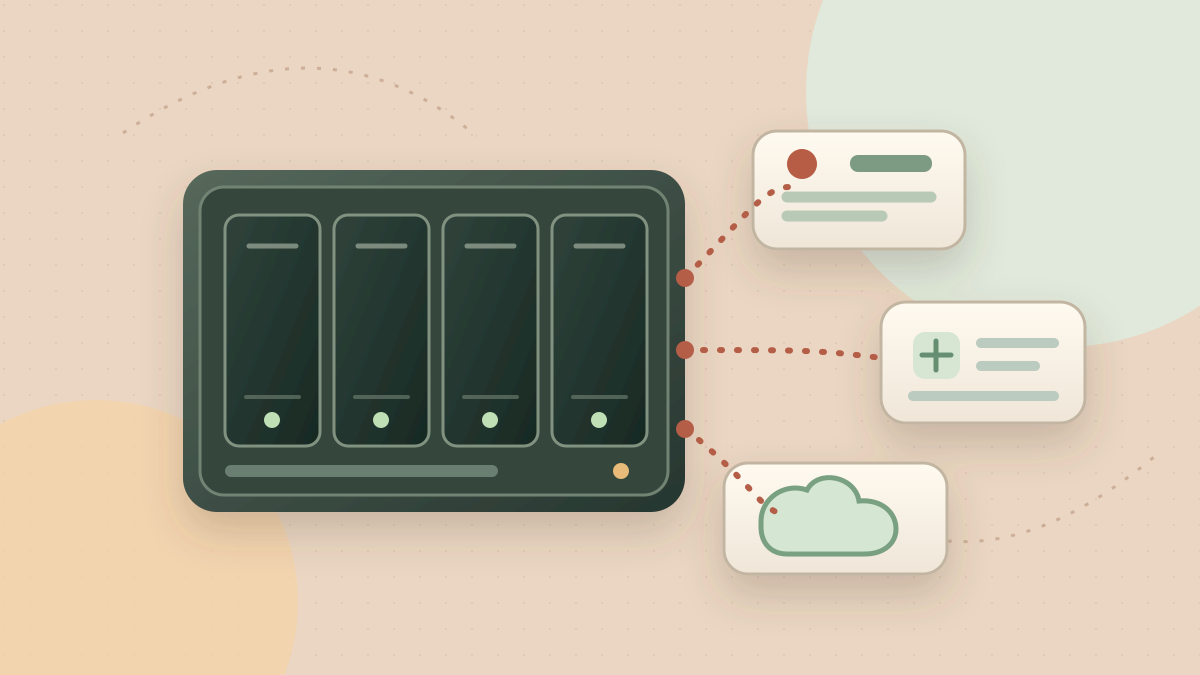
The NAS I bought before our move became my private cloud, Docker playground, game server and the machine that runs Home Assistant.
- Synology DSM
- Docker
- Tailscale
- Home Assistant
- Cloudflare Tunnel
I picked up a Synology DS923+ at an IT show in June 2023. By August, while we were getting ready to move, I was already turning it into far more than a place to store files. I later upgraded it to 32 GB of RAM because the list of things I wanted to run on it kept growing.
I have been playing with servers and open-source software since I was about 16, and self-hosting is still one of my favourite ways to spend an evening. I like finding a useful Docker project, figuring out how it works, setting it up and then discovering three more things I want to try. This NAS gave me a machine of my own to do that on.
A private cloud that I actually use
Synology Photos and Drive get used constantly in our house. My Obsidian vault lives in Synology Drive, which syncs it across the devices I write on. Our files and photos no longer depend on Google being the only place that keeps them. I still use outside services when they make sense, but having my own server means I get to decide where the important things live.
The NAS also runs Home Assistant OS in a virtual machine. The first HA experiment lived on my desktop in our old home; after we moved in September 2023 I rebuilt it as a VM on the Synology. That one experiment has since grown into a separate Home Assistant project.
The Docker rabbit hole
Containers let me add a service, learn it and keep it without turning the whole NAS into a fragile one-off installation. Portainer helps me manage them. Vaultwarden gives me a password manager I host myself, while AdGuard Home handles DNS filtering for the network. Synapse gives our household an internal messaging platform that we use through Element. NetAlertX and other monitoring tools help me see what is connected and whether the services I rely on are healthy. Some containers are permanent fixtures; others are experiments I leave parked until I have time to come back.
Tailscale connects my important devices and services privately. I have attached Tailscale sidecars to the containers I care about most so those services can be reached through my tailnet without treating everything on the NAS as one big public endpoint. Cloudflare Tunnel gives me another route for the services I choose to make available that way. I enjoy working out where each piece should live as much as I enjoy using the finished service.
I now run Hermes Agent on the NAS as a personal assistant for the devices and services the machine can reach. Hermes uses various models through OpenRouter, while the agent itself runs on my server. It is useful for the routine administration and troubleshooting that used to send me through several dashboards, with guardrails around what it can change. Having an agent nearby has made the homelab feel even more like a system I can keep improving instead of a collection of unrelated apps.
Game nights on our own server
I have also hosted private worlds for the kids in games such as Valheim, Satisfactory and Minetest. Part of the appeal is that they can play together without being thrown onto random public servers. I am very much a Steam-and-PC dad; Roblox is banned at home and the kids know I have opinions about that.
There is always another thing on the list. Plex and Immich are two I want to explore next. The rabbit hole has taken plenty of evenings, but that is exactly why I keep coming back to it.
I wrote the longer version, including the container experiments and game servers, in the Synology NAS post.